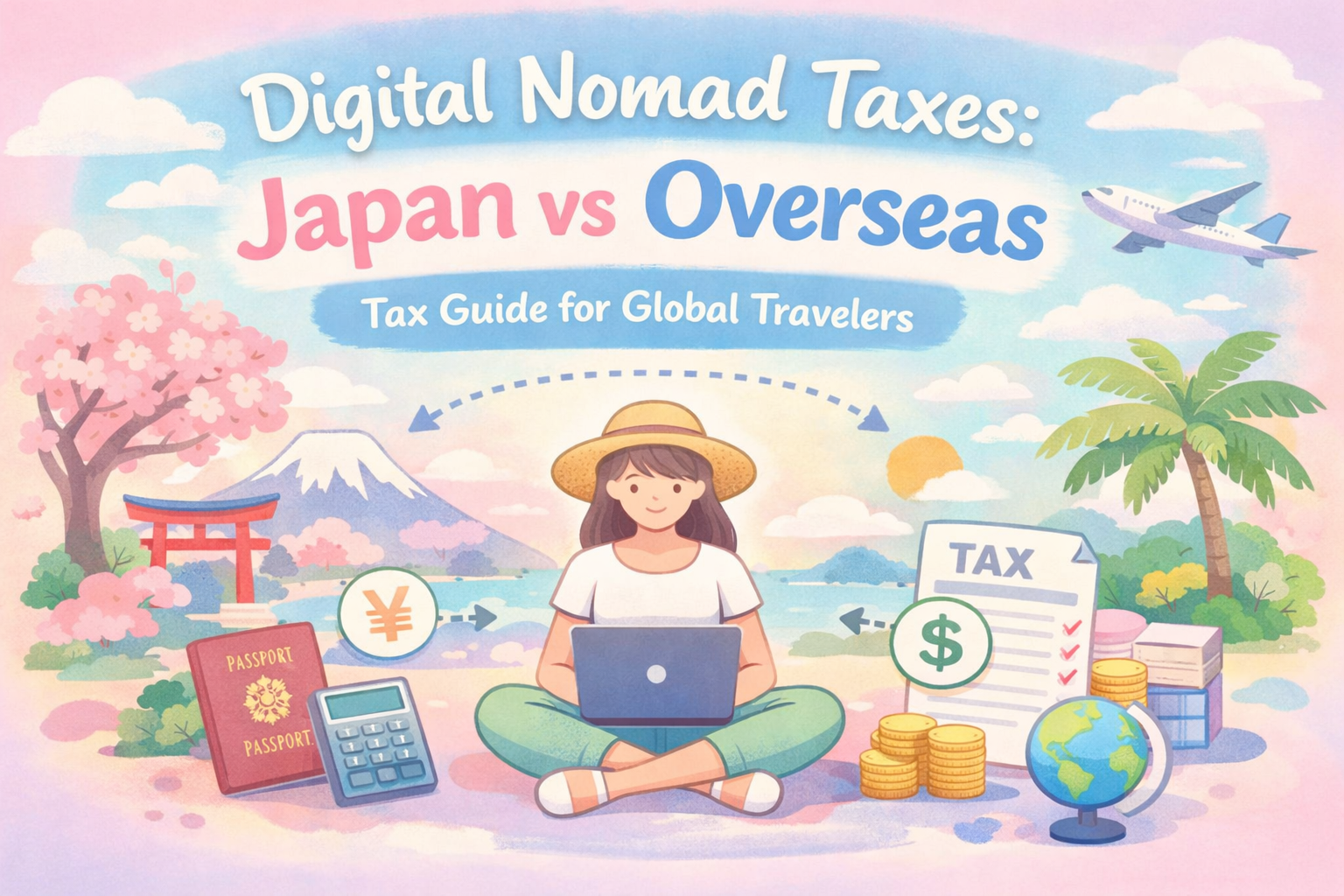
Digital Nomad Taxes Guide: Japan vs Overseas — Complete Article Structure
sugidori
1. Introduction: Why Taxes Matter for Digital Nomads
Digital nomads often move between countries, but tax residency does not move as easily.
The key question: Are you a tax resident of Japan or not?
This article explains the difference, filing requirements, and common mistakes.
2. What Determines Your Tax Residency?
2.1 Definition of “Tax Resident” in Japan
Having a permanent home in Japan
Staying in Japan for 1+ years
Family, home, or economic ties in Japan
→ If yes, you are a Japanese Tax Resident
2.2 Definition of “Non-Resident”
No address in Japan
No long-term stay (less than 1 year)
Life base is overseas
→ You are a Non-Resident
2.3 Why This Matters
Tax residency determines:
Where you pay taxes
Whether you must file in Japan
Whether foreign income is taxable
3. Tax Rules for Japan-Based Digital Nomads (Residents)
3.1 Worldwide Income Taxation
Japan taxes all income, including:
Overseas freelance work
Remote work for foreign companies
Affiliate income
Crypto gains
3.2 Do You Need to File a Tax Return?
Yes — Japanese tax filing is required if:
You earn freelance income
You earn foreign income
You earn more than ¥200,000 outside salary
3.3 Foreign Tax Credit
If you paid tax abroad, Japan allows a foreign tax credit to avoid double taxation. → Learn Foreign Tax Credit
4. Tax Rules for Digital Nomads Living Abroad (Non-Residents)
4.1 What Income Is Taxed in Japan?
Only Japan-sourced income, such as:
Work for Japanese clients
Japanese real estate income
Dividends from Japanese companies (withholding tax applies)
4.2 What Income Is NOT Taxed in Japan?
Foreign client income
Overseas freelance income
Overseas salary
4.3 Do You Need to File a Tax Return?
Usually no, unless you have Japan-sourced income. → Non-resident filing rules
5. The “183-Day Rule” Explained
5.1 What It Means
Many countries consider you a tax resident if you stay 183+ days.
5.2 Why Nomads Get in Trouble
Staying short-term everywhere
Not becoming a resident anywhere
Japan may still consider you a resident if your “life base” is there
5.3 Real Example
A nomad who removed their Japanese residency but kept family and home in Japan → Japan taxed them as a resident retroactively.
6. Japan vs Overseas: Tax Comparison Table
Category
Japan Resident
Non-Resident
Tax Scope
Worldwide income
Japan-sourced income only
Foreign Client Income
Taxed
Not taxed
Japan Tax Return
Required
Usually not required
Resident Tax
Yes
No
Health Insurance
Required
Not required
Double Taxation
Foreign tax credit
Avoided via treaties
7. Common Mistakes Digital Nomads Make
7.1 Thinking “I left Japan, so I’m not a resident”
Wrong — residency is based on life base, not travel.
7.2 Not understanding tax treaties
Some countries tax foreign income; others don’t.
7.3 Becoming “stateless” for tax purposes
This triggers audits and back taxes.
8. How to Avoid Double Taxation
Use tax treaties
Use foreign tax credits
Avoid becoming a resident in two countries
Track days in each country
Keep documentation
→ Learn how to avoid double taxation
9. Case Studies (Easy to Read)
Case 1: Japan Resident Working for US Clients
→ Must file in Japan, worldwide income taxed.
Case 2: Living in Thailand, Japanese Clients Only
→ Japan taxes Japanese-source income only.
Case 3: Traveling 12 months, no home base
→ Japan may still consider you a resident.
10. Final Checklist: Are You a Tax Resident of Japan?
Do you have a home in Japan?
Do you have family in Japan?
Do you stay in Japan for long periods?
Do you maintain Japanese insurance, bank accounts, etc.?
→ Run a residency simulation
11. Conclusion
Understanding tax residency is the single most important factor for digital nomads. Japan taxes residents on worldwide income, but non-residents only on Japan-sourced income. Knowing your status prevents double taxation, penalties, and unexpected bills.
Hi, I'm a little yellow bird who loves flowers and exploring. This site is your ultimate guide to traveling and remote working from Fukuoka. I’m here to share the best local spots, cafe workspaces, and travel tips to help you enjoy your stay!